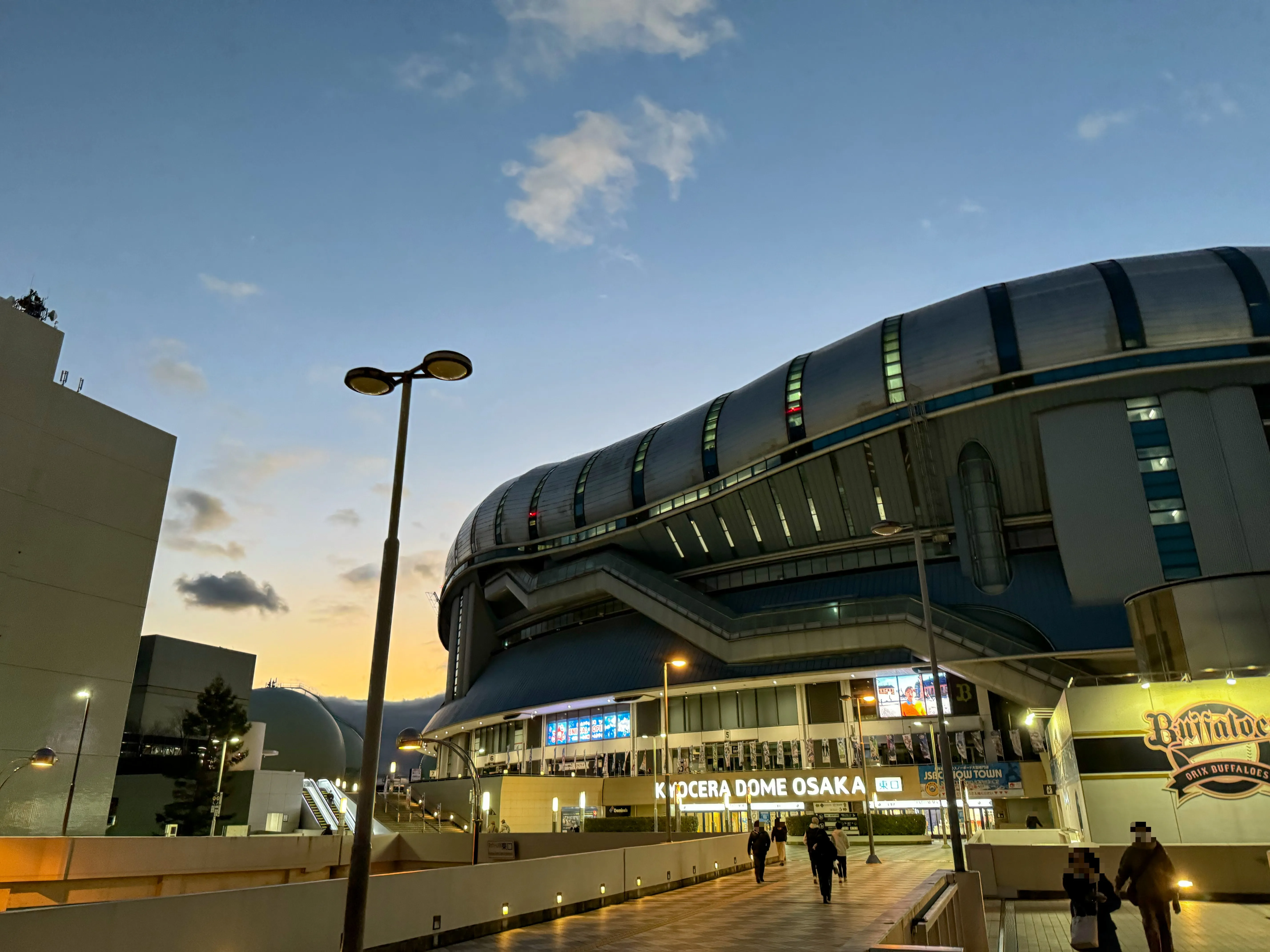
Comprehensive Guide: Kyocera Dome
Everything you need to know about Kyocera Dome, one of the "Big Five" domes of Japan located in the heart Osaka.
Last Verified Visit: 13 & 14 Dec 2025
Verdict: Kyocera Dome sets the gold standard for a high capacity venue with good access, sightlines, food options and venue acoustics. However, stand seating does not have good legroom and is a tangible downside.
The Good
- Up to 3 different train stations plus a bus stop for access
- Aeon mall and Foleo mall right next to the venue for a variety of food options
- 55,000 capacity puts it at the top tier of high capacity venues in Japan
- Extremely close affordable hotel option: Toyoko Inn Osaka Dome Mae
- Venue acoustics are good for a giant dome
The Bad
- High level stands are far from the stage (due to the large venue capacity)
- Stand seats are cramped compared to other venues
| Key Information | Details |
|---|---|
| Name | 京セラドーム大阪 (Kyocera Dome Osaka) |
| Official Website | https://www.kyoceradome-osaka.jp/ ↗ |
| Capacity | 55,000 (official capacity) |
| Area | 千代崎 (Chiyozaki), 西区 (Nishi-ku / Nishi Ward), 大阪市 (Osaka City), 大阪府 (Osaka Prefecture) |
| Closest Stations | 1) Dome Mae Chiyozaki ドーム前千代崎駅 (Osaka Metro) 2) Dome Mae ドーム前駅 (Hanshin) 3) Taisho 大正駅 (JR) |
| Coin Lockers | Yes, details unknown |
| Oversized Item Cloak | Not available |
| Nearest Convenience Store | Lawson in Dome Mae Chiyozaki Station or Lawson Osaka Dome City (Both ~300m) |
| Parking | Yes, 3000 yen for cars. Nearby alternative parking also available. Bicycle parking outside Aeon Mall |
| Taxi | No taxi stand. |
| Food/Drink in Venue | Yes. |
| Entry Drink Charge | No. |
| Flowerstand Placement (Observed) | Inside Venue, 2F |
These guides are updated as venues change. Subscribe to the newsletter to get notified when this or any other guide is revised, re-visited or expanded.
Basic Access#
Kyocera Dome is highly accessible, with both train and bus options.
- Dome-Mae Station (ドーム前駅): Hanshin-Namba line
- Dome-Mae Chiyozaki Station (ドーム前千代崎駅): Nagahoritsurumiryokuchi Line
- Taisho Station (大正駅): Osaka Loop Line and Nagahoritsurumiryokuchi Line
- Dome-mae Chiyozaki Bus stop (ドーム前千代崎): Buses 70 and 76
Between these 4 choices, you will have plenty of ways to reach the venue.
If you require more bus options you can look into Taishobashi bus stop (nearest stop to Taisho station) and Sakaigawa bus stop (nearest stop to Foleo Osaka Dome City mall).
Walking Routes#
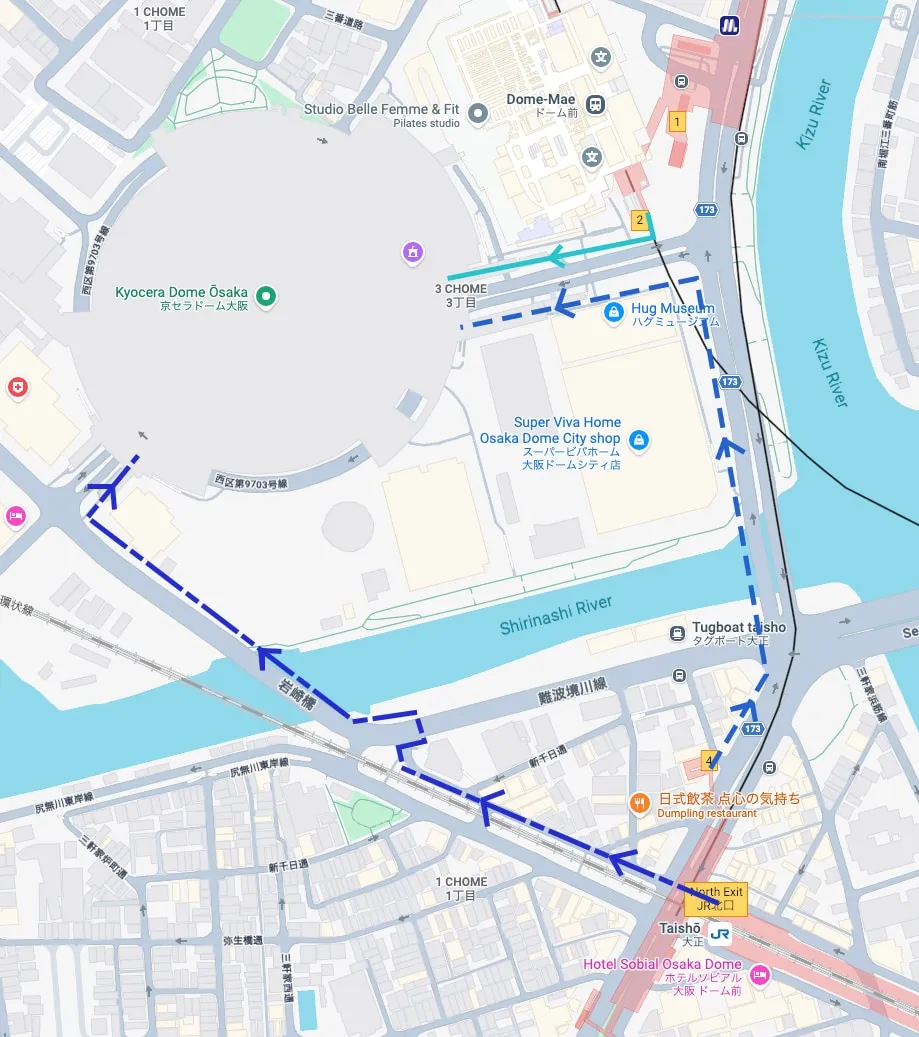 Walking routes to Kyocera Dome
Dome-Mae and Dome-Mae Chiyozaki <200m
- Follow signs to Kyocera Dome. Exit number should be 2 from Dome-Mae station. Dome-Mae Chiyozaki connects to this exit as well. Elevator access available.
- From exit 2, turn right to face the dome and follow the stairs/escalator up to Kyocera Dome.
Taisho Station (Osaka Metro) ~500m
- Exit 4 from Osaka Metro (Elevator access included) will bring you to ground level.
- You should see a bridge on the left (if facing the main road)
- Keep heading down the road until you see a bridge. Cross the junction and head over the bridge
- Continue in the same direction until Aeon Mall comes into view. From here head left and climb up the stairs to Kyocera Dome
Taisho Station (JR line) ~600m
- Take the north exit from the JR line. There are two entrances.
- You want to cross the road parallel to the train lines. Ensure that you’re walking on the road where the train lines are to your left.
- Head down the narrow road
- Keep going until you see round gas tanks on the horizon. Cross the road to the other side. Ensure that you’re on the right side of the bridge.
- Keep walking down the road in the direction of the round gas tanks
- You will see a junction with Toyoko inn in one corner after passing かごの屋 on your left.
- Turn right on this junction and head up the stairs to Kyocera Dome
Seat Comfort#
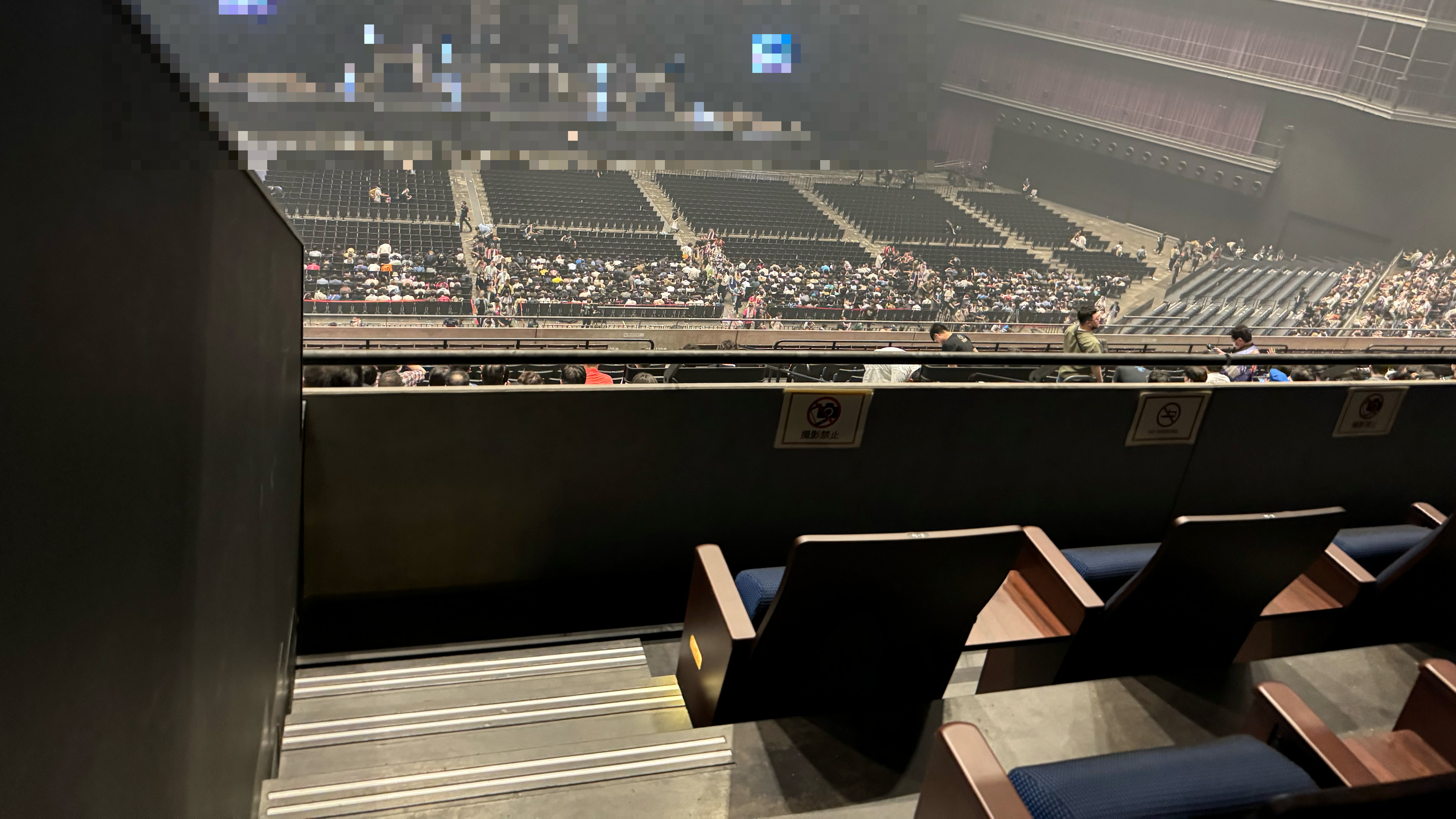
To start off, here is my legroom evaluation using my standardized legroom test method using a large bag as a spacer. I recommend reading the methodology post to find out what the ratings mean and how the test is done.
| Location | Rating | Remarks |
|---|---|---|
| Level 1 Arena | Average (Foot Contact) | Seats do not fold |
| FA/FB Block Stands | Did not test | Table with storage, cupholder in armrest |
| Upper/Lower stands | Below Average (Knee Contact) | Seats fold, rigid cupholder |
| Vista Room seats | Did not test | Seats fold |
As a sporting venue this venue relies heavily on temporary seating for its Arena seats. In all the concerts I’ve attended, these are in the form of temporary folding pipe chairs. These chairs while not necessarily uncomfortable, are notorious for intruding in the footwell (due to the horizontal bar that runs the width of the leg) and making a ton of noise when they’re not in good condition and people shift around in the seats. Legroom is otherwise passable in this case.
Stands in Kyocera Dome have a different problem. Legroom and seat width are not great. We have folding plastic stand seats here. A lot of the dome venues have this issue where they are optimized for seating capacity rather than for comfortable seating in a concert and it shows. In my standardized testing this was one of the few venues in recent memory where it felt tighter than I would have liked.
There’s also the FA/FB block which are premium seats. These seats come with a table in front of each of them, with storage area under the table, a large individual armchair with cupholder in the armrests. I’ve not tested these myself but definitely seems like the best seats in the house from a comfort perspective.
Finally as the true VIP glass box experience, Kyocera Dome has the Vista Rooms. These feature a room with couch and large chairs outside of it. You seem to be able to order fancy meals and drinks including alcohol. For more details, refer to the official website vista room guide. ↗
Layout & Views#
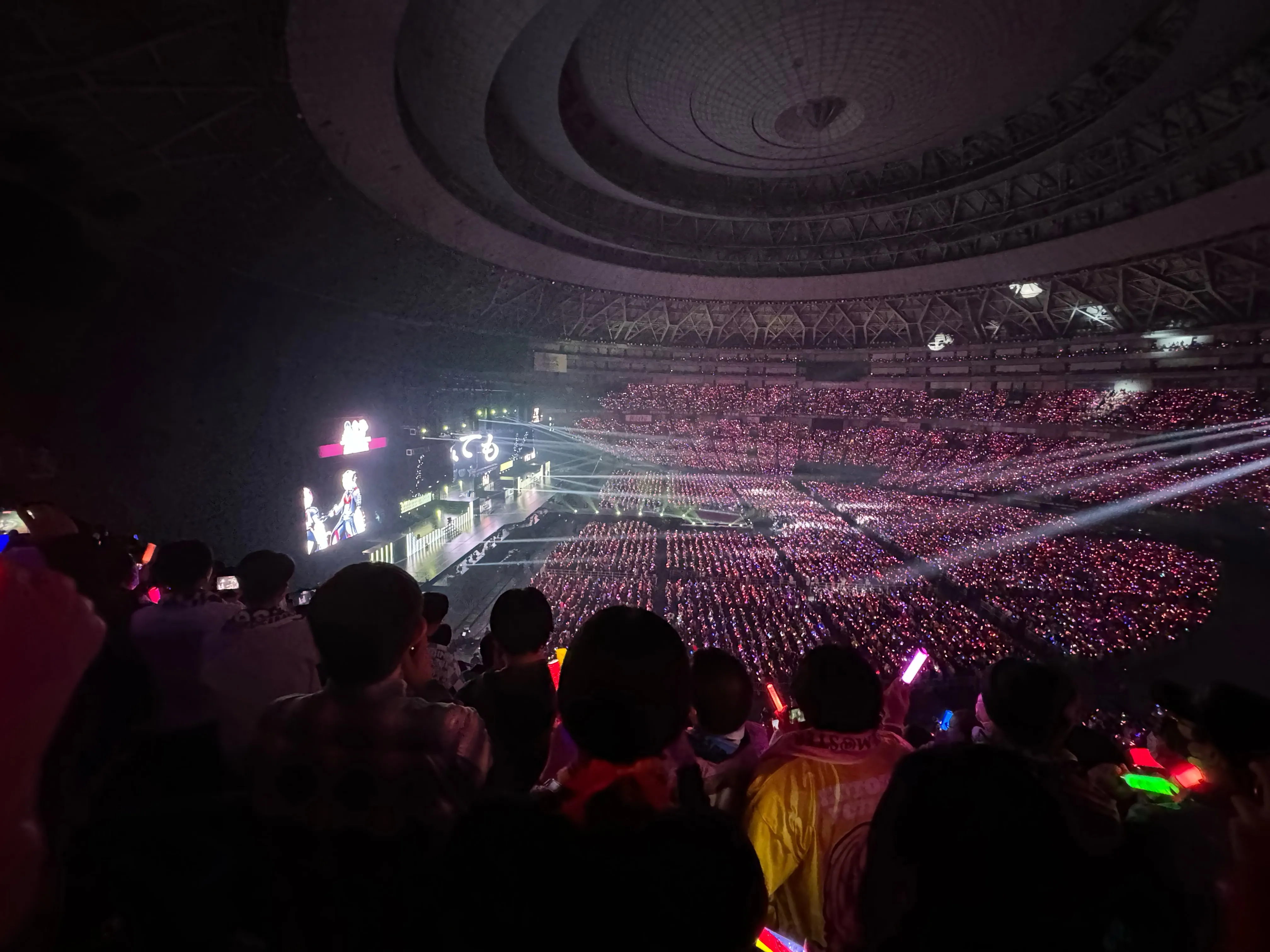 Wide angle shot of the interior taken during a live (when photography was permitted) from an Upper Stands seat
There are some photos provided by the venue of some of the views on the official website ↗.
Kyocera Dome is broken up into 3 large seating levels: Arena, Lower Stands and Upper Stands. Because these levels are so big, there’s a huge difference between being the front and back of each level. Thus its hard to make an exact comment on all possible angles, though no matter where you sit you should be able to see the stage. (Barring some poles or rigging that may be event dependent.)
I would classify the views of Kyocera Dome into a few broad categories.
- Arena - Flat. Close to the action if you’re near the front, otherwise you’re heavily reliant on height to get a good view.
- Lower stands - Generally safe views, but can be far due to the sheer size of the venue. No issue with sightlines
- Upper stands - You feel very distant from the action. While the sightlines are unobstructed, the size means you’re looking down on the action a lot. On the bright side, the viewing angles are not uncomfortable.
Venue Acoustics#
Venue Acoustics for Kyocera Dome are generally good for a large dome venue. When the venue is quieter (eg, no music playing) you will hear some echo due to the physics reality of a large venue, but once music comes on you don’t pick up any of that anymore. After multiple concerts in this venue, the conclusion I’ve reached is that it always sounds good. Many smaller venues that don’t have the audio delay realities of engineering sound for a large dome can be much poorer than this.
Facilities#
Coin Lockers#
Strangely the official website is very poor at providing information on coin locker availability. From site surveys, we know that there are coin lockers available but no details on the exact quantities available and where they are located. To make matters worse, they’re not even marked on the floor map.
The best clue I have is froma third party website listing nearest coin lockers to the venue on coinlocker navi (Japanese) ↗. Standard pricing around the area seems to be 300 yen for small, 400 yen for medium with very low availability for large size.
Due to the additional uncertainty in coin locker availability, I would come early to make sure that I can find a coin locker, especially if you have larger items and need a large size one.
Toilets#
The official website shows the toilets on its map, but it doesn’t provide any further details on the size of each toilet and how many stalls they have. Numbers are provided based on whats shown on the map.
The toilet situation at Kyocera Dome is actually pretty decent for a 50k capacity venue. 2F of Kyocera Dome has 5 male toilets and 7 female toilets. There is also one wheelchair accessible toilet on the same level.
While this isn’t like a crazy large amount of toilets in the absolute sense, it helps keeps the queues to use the toilet modest.
My personal preference is to look for the toilets closer to the south entrance which face away from the two closest stations.
Inside the venue
The toilet situation inside the venue is adequate for a 50,000 capacity venue but I would not consider it generous.
Here’s the details from the floor map:
- 1F arena has no provided map so I have no details on the toilets. I recall there being toilets but cannot confirm the quantity.
- 3F Lower Stands have 7 female toilets and 7 male toilets. Most of these are marked wheelchair accessible or have a wheelchair accessible toilet next to them.
- 5F stands have 6 female and 6 male toilets. 4 of them are wheelchair accessible.
- Interestingly the Vista Room floors 6F to 8F have no toilets marked on their map. I haven’t been there so I can’t confirm if there are truly no toilets or it’s just unmarked.
In an ordinary ~10k capacity venue I would say this is very good toilet availability, but when attendee counts reach into the 40,000+ range this is a significantly different toilet to attendee ratio. Thus, I would consider it acceptable but not class leading.
My advice is to use the toilet before the live and use these inside toilets only if you really have to at strategic timings where possible.
Food & Drink#
Kyocera Dome has no shortage of food stalls available. You’ve got variety and even branded chains operating stalls in the paid area. If you’re coming from barren exhibition and music halls, you’ll feel spoiled for choice.
Because there’s a rather large selection I will refer you to the store list from the official floor guide. 3rd Floor Guide ↗ and 5th Floor Guide ↗
Take note about the amount of redundancy available too. Mos Burger and KFC operate 3 stalls across the 2 floors. That means if you really want food and have time to scout, you can always opt for the shortest queue.
While I would stop short of recommending having your lunch inside the dome, I can say you won’t be going hungry given all the options for finger food.
Where to Eat Before the Show#
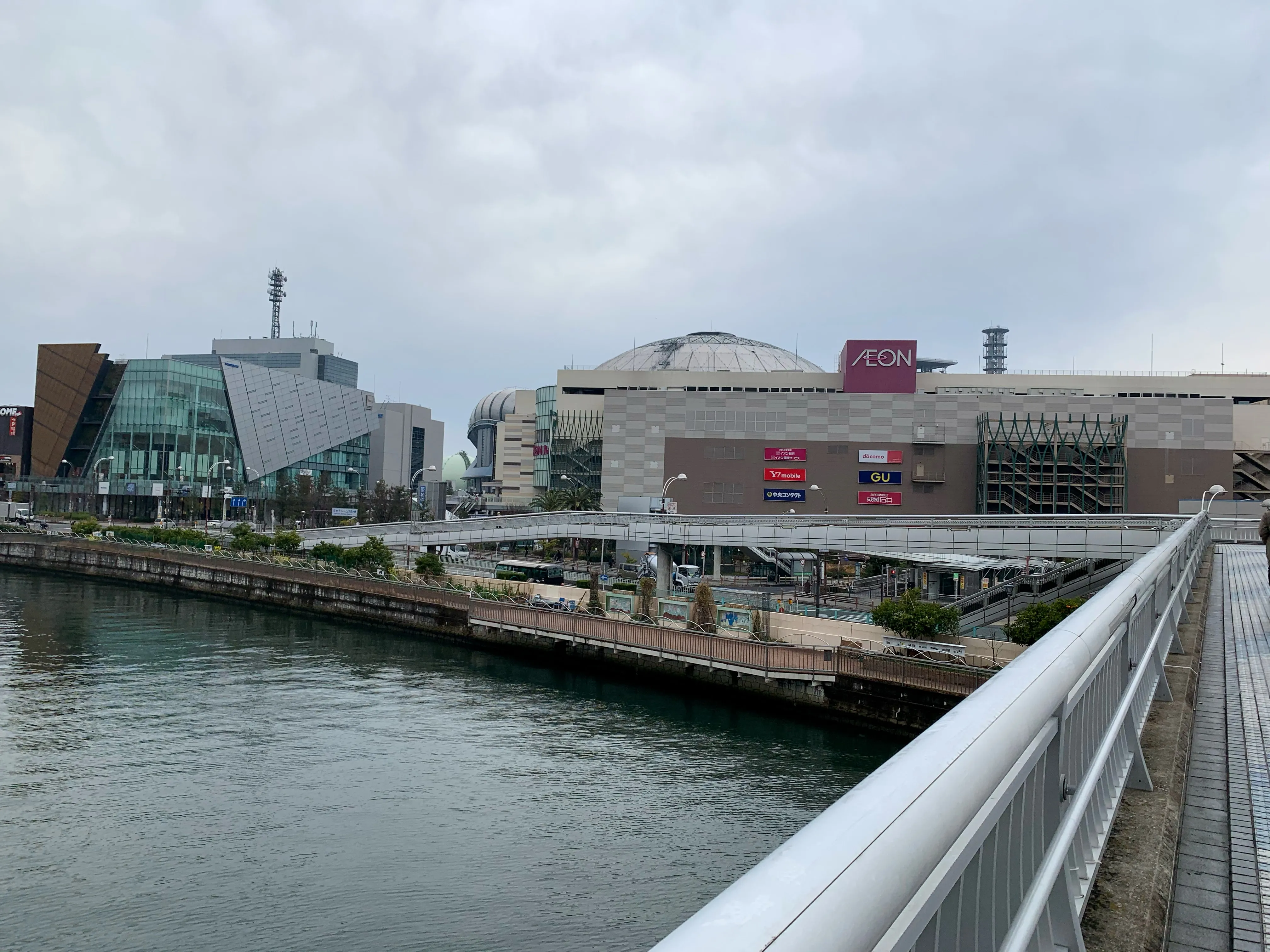 Photo of Kyocera Dome behind the large Aeon Mall Osaka Dome City sitting in front of it.
Choosing a place to eat before the show is not difficult. Aeon Mall Osaka Dome City, Foleo Osaka Dome City and Kyocera Dome itself are the three biggest dining clusters in the area. A short walk will take you to other food options around the area, and a short train ride can bring you just about anywhere else. To put it simply, you will have options even when the obvious choices are packed.
Some other observation points
- The food court at Aeon Mall is very large and seats a lot of people, but you might find the seats camped out by people who aren’t actually eating food.
- Because Aeon Mall is closer to two of the major lines, Foleo may actually be a pretty good place to check first if you’re worried about crowding.
- Taisho station and its surrounding area is a dining cluster in itself. Worth considering if you want to eat somewhere else.
Exiting & Crowd Control#
Crowd control for large venues can be absolutely miserable. 50,000 people is a lot of people and some large dome venues make this really painful. Fortunately, Kyocera Dome gives you enough choices that make this among the better venues.
This starts from the exit procedure, in the concerts I’ve been to, multiple gates are opened to funnel people out of the venue instead of forcing people down one or two bottlenecks. From there, people are routed based on their exit destination.
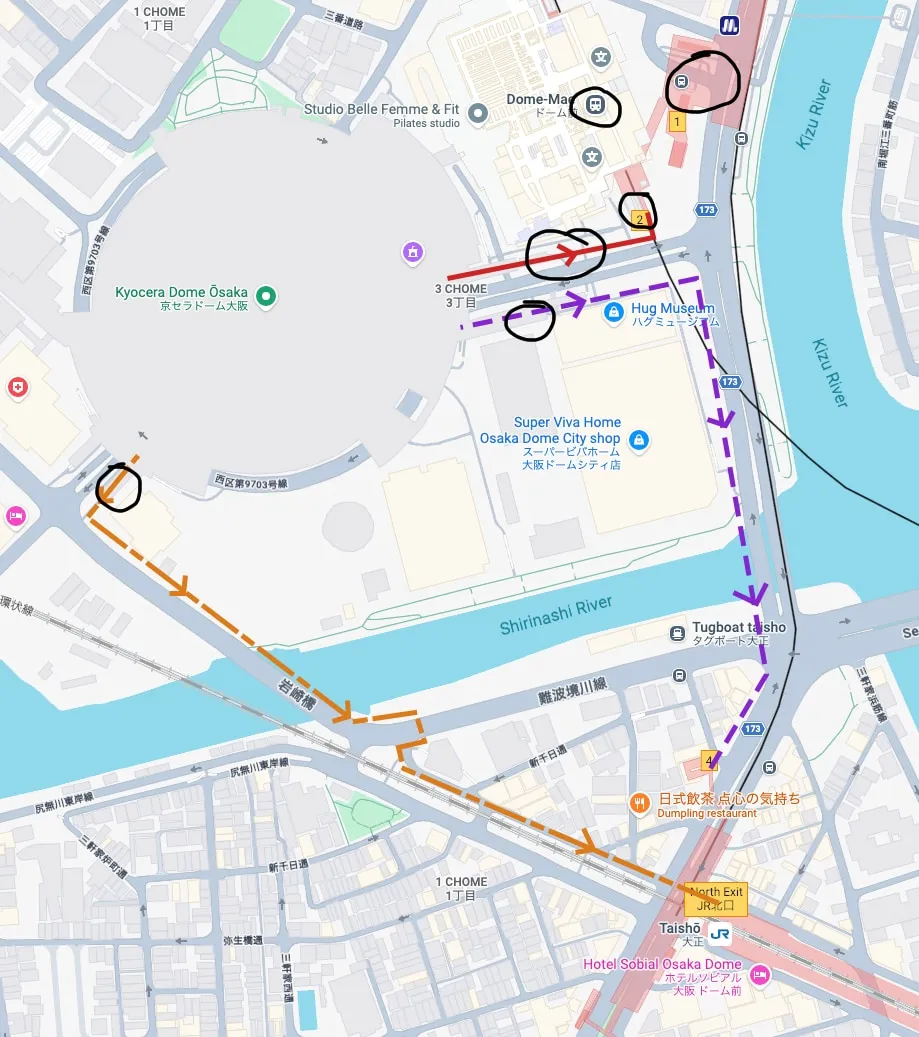 Some common exit routes from Kyocera Dome during exit control. Circled in black are the main choke points observed and from research.
Getting to the train station is not particularly difficult. For some exit gates, they route people through the unpaid 2F dome area for crowd management, therefore it’s important to decide on your destination early to pick the right direction.
The stairs funneling down to the train stations will be the biggest chokes. Followed by the train platforms saturating due to the sheer amount of people.
A core decision point is whether you will be eating near the venue or running for the train first. If you choose to eat first, you can defer the exit problems to later (or potentially skip them completely if you wait for crowds to disperse)
For more information on how to get your meal near the venue, read the following section to find out!
Where to Eat After the Show#
Last order timings are the classic problem with this venue. The options are similar to before but there are some core changes.
The food establishments on the 2nd floor of Kyocera Dome are closed by the time the show ends. Don’t expect to be able to eat here.
Be aware of last order timing in this area. For some event days I’ve observed that Aeon Mall may have extended operating and last order timings for many shops on Saturday but not on Sundays. Be sure to check the mall for notices. If extended last order time is available, heading to the mall right away for a meal and to linger until the crowd has gone home is my favorite play here.
In the event of no extended last order at the malls, the shops generally still operate late enough to have a quick meal, but the downside would be that you don’t get much time to linger. In practice, I’ve found that heading to the train stations after having your meal and leaving before closing still puts you at that window where the train platforms are packed.
The recommendation is to focus on getting out of the crowd first then figure out your meal later if you don’t already have pre-made plans. Due to the good connectivity of the venue, getting to another dining cluster is not difficult.
Where to Stay#
With the large variety of connecting options you could pick just about anywhere in Osaka and not have too much of an issue getting there. One potential idea of “going against the direction of the crowd” would be to stay at Umeda and exit the venue through Taisho, using the JR loop line to get there.
In terms of noteworthy hotels, I will highlight the closest hotel option.
Toyoko Inn Osaka Dome Mae
This is probably one of the few more affordable right-at-the-venue hotel options for a major venue in Japan. Most large domes and arenas are typically right next to an expensive hotel, like Tokyo Dome Hotel or the Hilton Fukuoka in front of PayPay dome. That combined with the food options around the area makes this very compelling choice.
There’s just one problem. Availability.
Unfortunately since Toyoko Inn rooms are available a long time in advance and the cancellation is free, individuals reserving a room just to hedge and cancel later will affect availability. Having a vacant room on a Saturday is like striking gold, as a quick scan of the room availability shows that most weekends up until the booking limit are often already fully reserved.
I would like to try to book this hotel at some point, but I’ve just not been able to secure a room, even in instances where I book a hotel within 10 minutes of the event announcement.
Otherwise the near access to the dome, no-nonsense room and service, free breakfast and ability to clock nights towards Toyoko Inn’s simple loyalty program make this very appealing. (Just keep in mind this is a Onigiri breakfast serving hotel not the more commonplace Toyoko Inn standard Buffet)
Conclusion#
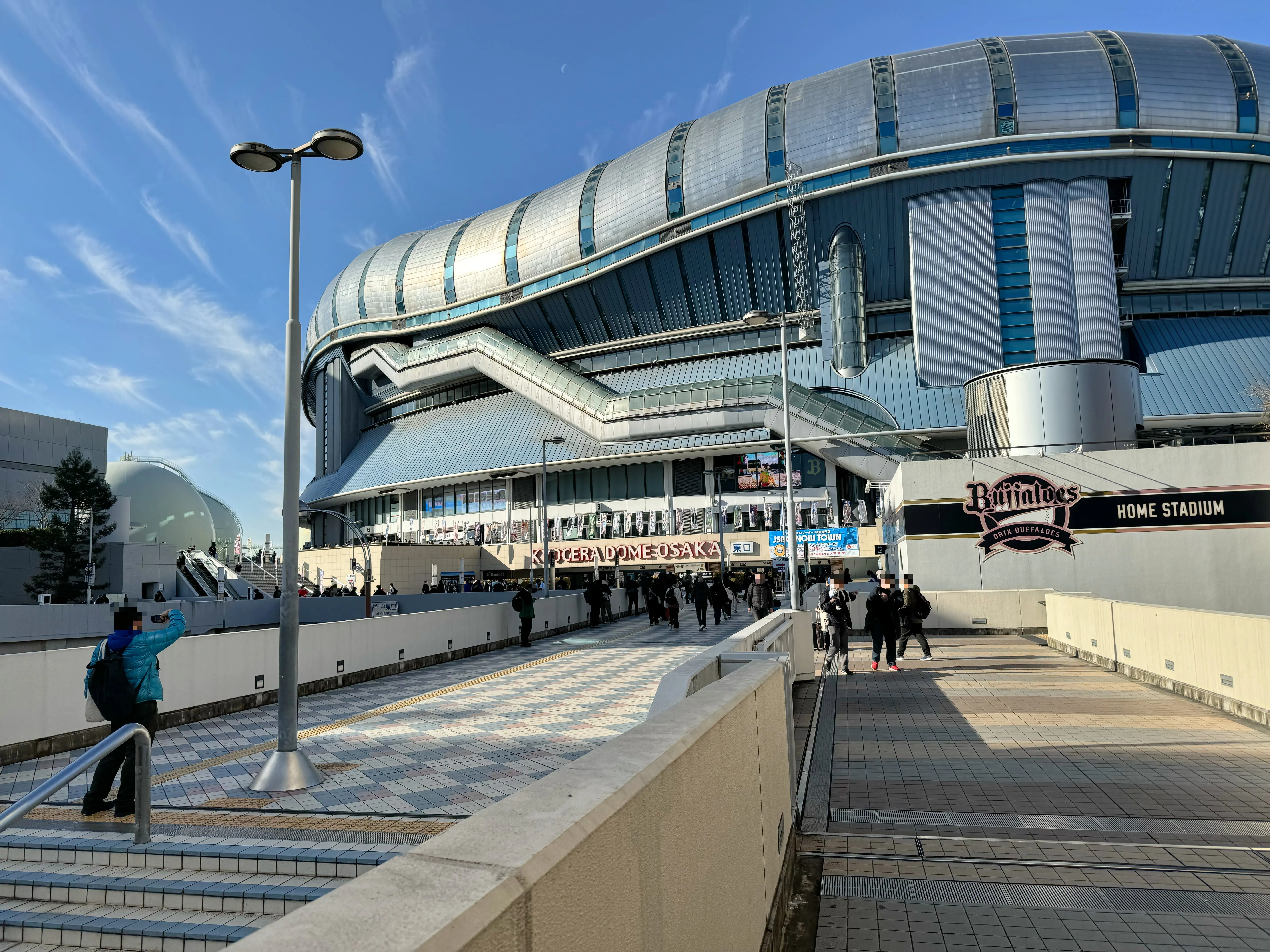
Kyocera Dome is one of the best large capacity venues you have. Between the good audio, variety of train access routes, multiple dining clusters and good distance to the rest of the city, it is very hard to beat in many aspects. The seat comfort isn’t great compared to other music venues but is something I’m willing to overlook. I’ve been to this place multiple times now and I have a hard time deciding if this or Tokyo Dome is my favorite dome venue, but it’s solidly in the top 2.
If this guide was useful, the newsletter is worth a look. It covers updates and revisions to guides like this one whenever venues change or a new visit warrants it, so the information you’re relying on stays current. Occasionally it features other pieces that don’t fit the guide format but are worth your time if you’re navigating live events in Japan.
Subscribe Here