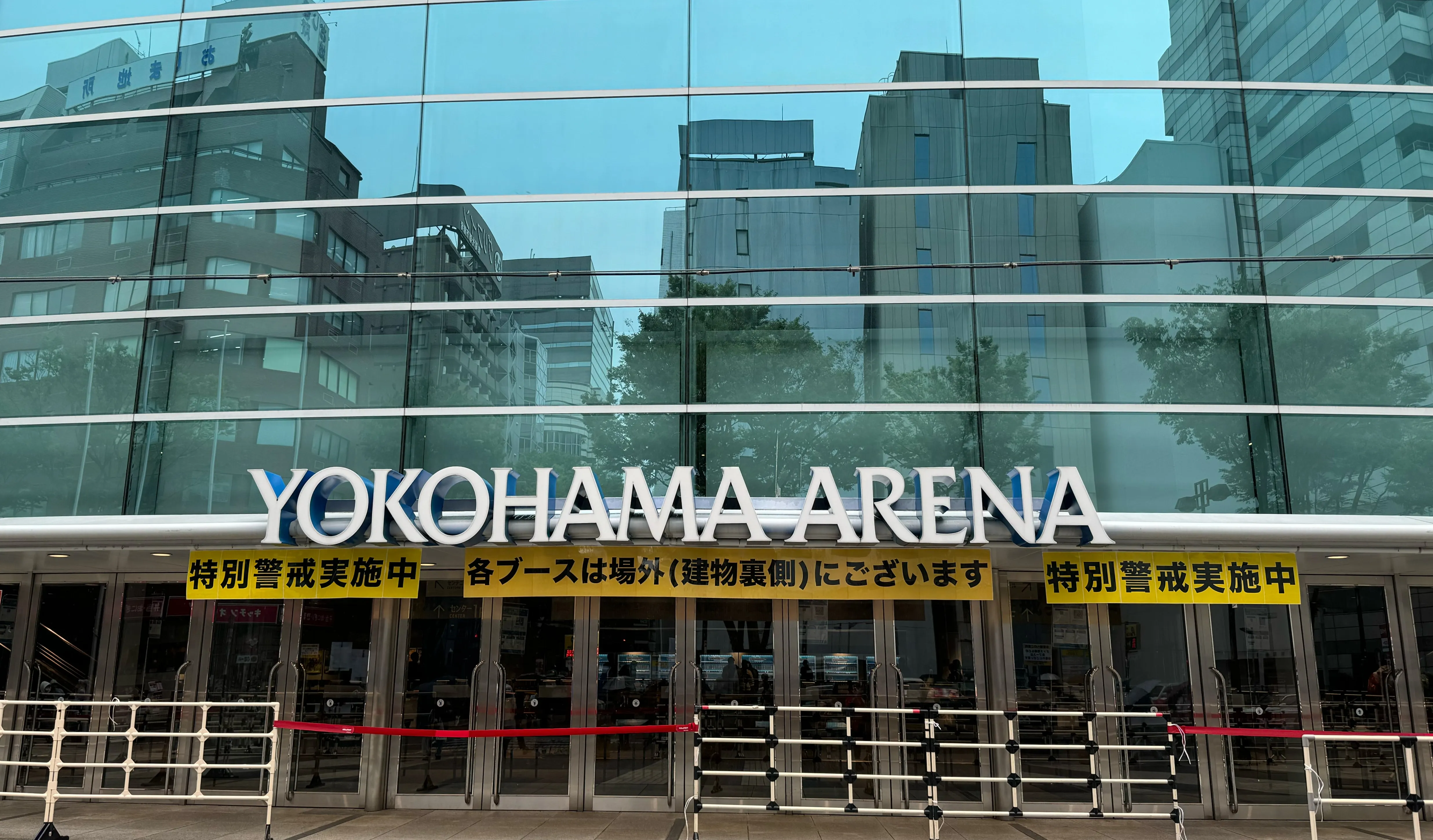
Comprehensive Guide: Yokohama Arena
Everything you need to know about Yokohama Arena, the venue that people often mix up with K-Arena
Last Verified Visit: 6 & 7 Jun 2026
Verdict: Yokohama Arena is a nice, easy to access venue in the middle of the city. It features good sight lines and seating. However, it has numerous small issues that may annoy you, like poor outdoor toilet availability, misleading section naming with “2F Arena”, poor urinal count per toilet, gaps you can trip on in stands seating and more. Overall, the general lack of major deal breakers means the only showstopper is getting the venue or train station wrong, as this is at Shin-Yokohama instead of Yokohama Station.
The Good
- Great access, as close as you can get to arriving to a venue by Shinkansen
- Near the city, plenty of convenience stores, amenities and restaurants around.
- Center seating has excellent legroom
- Convenience store right at the venue, with a few more in the surrounding area
The Bad
- One outdoor toilet available, with long lines close to show time
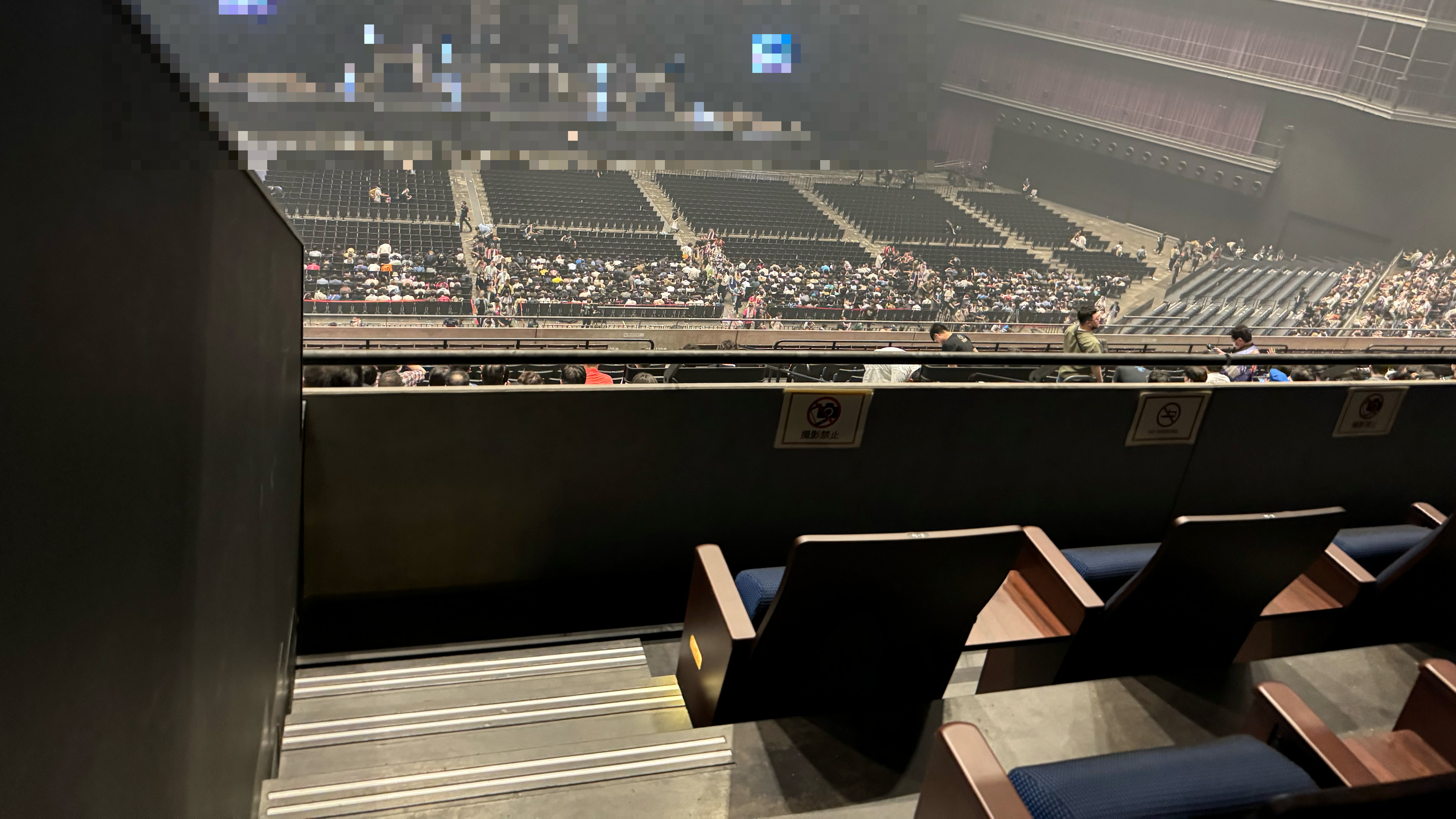
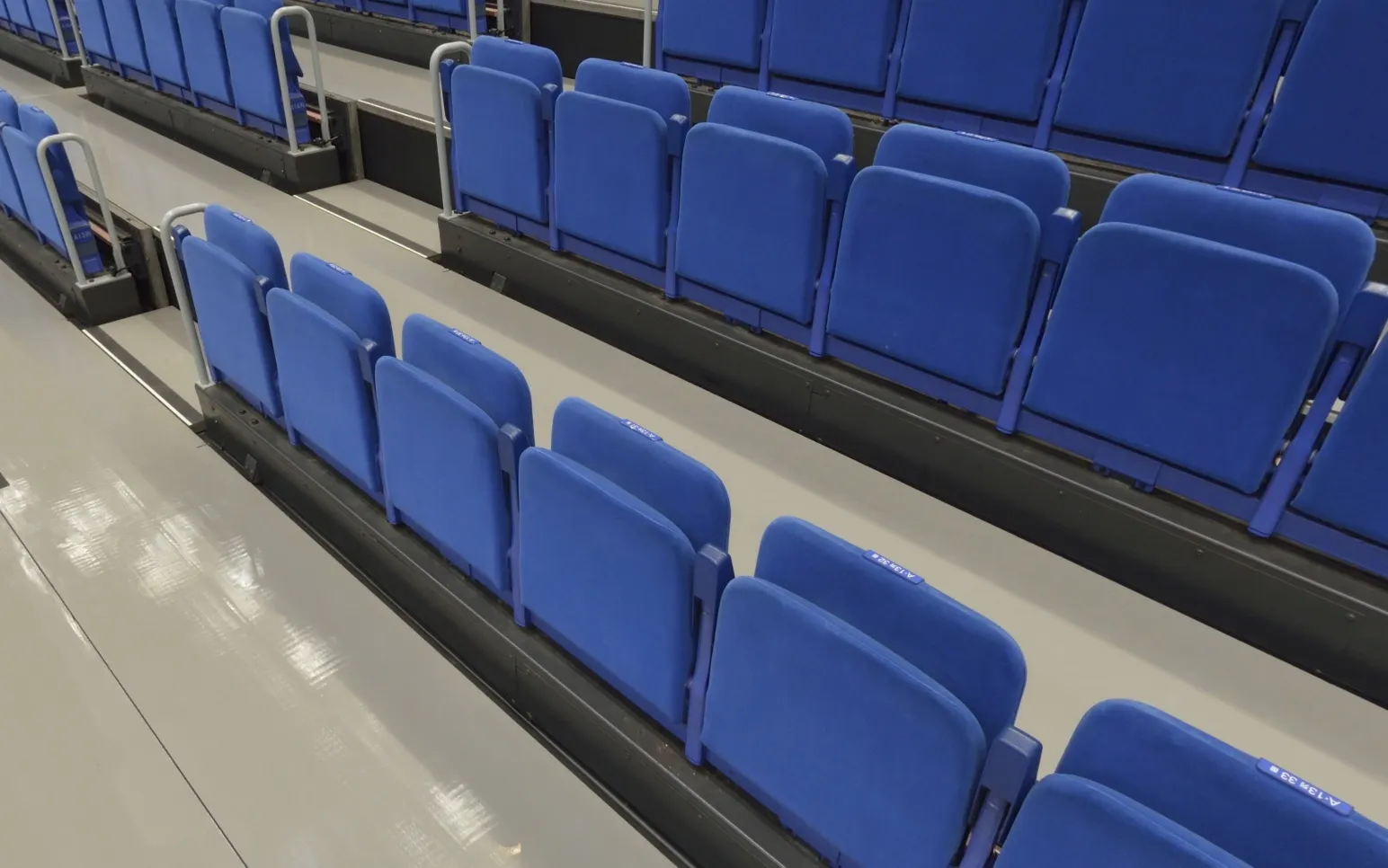
- Stand seats have a gap near the seat mounting point, which you may trip on if you stand near, or lose items in them.
- Each male toilet checked had only 4 urinals, despite having over 10 stalls, leading to long queues
- The naming of the seat layout is misleading, with only 3F officially called “stands”, and the traditional “Arena” space is called “Center” instead
- Exit control can be miserable if you are forced through front door only
| Key Information | Details |
|---|---|
| Name | 横浜アリーナ (Yokohama Arena) |
| Official Website | https://www.yokohama-arena.co.jp/ ↗ |
| Capacity | 17,000 (Maximum) 13,443 “A-layout”, 12,477 “B-Layout” |
| Area | Shin-Yokohama, Kohoku Ward, Yokohama City, Kanagawa Prefecture |
| Closest Stations | Shin-Yokohama |
| Coin Lockers | ~33 outside venue (Studio Mugic Yokohama Arena) and ~592 inside venue in small and large size |
| Oversized Item Cloak | cafe & studio MUGIC offers this service |
| Nearest Convenience Store | Lawson right at the venue. (ローソン 横浜アリーナ店) FamilyMart 175m away (ファミリーマート 新横浜三丁目店) |
| Parking | No parking for visitors |
| Taxi | No Taxi Stand |
| Food/Drink in Venue | Available |
| Entry Drink Charge | None |
| Flowerstand Placement (Observed) | None during last visit |
These guides are updated as venues change. Subscribe to the newsletter to get notified when this or any other guide is revised, re-visited or expanded.
Background#
Yokohama Arena opened on 1 April 1989, and its seating was refreshed by Kotobuki Seating in 2016. According to Wikipedia ↗, the venue was modeled after Madison Square Garden. The page also warns readers not to confuse it with K-Arena Yokohama, which gives you an idea of how common that mistake is. It is a distinction worth emphasizing throughout this guide.
Basic Access#
Yokohama Arena is located at Shin-Yokohama. That is probably the number-one gotcha for most visitors. The other is mistaking Yokohama Arena for K-Arena Yokohama. They are very different venues, so make sure you have the right station and destination.
Several rail services stop at Shin-Yokohama:
- Yokohama Municipal Subway Blue Line
- Sotetsu Shin-Yokohama Line
- Tokyu Shin-Yokohama Line
- JR Yokohama Line
- Tokaido Shinkansen
The inclusion of the Shinkansen does mean that Yokohama Arena is technically one stop away from Nagoya station.
Among the other rail services, the notable ones are the JR Yokohama Line, which connects with the Keihin-Tohoku Line, and the Blue Line, which links Shin-Yokohama directly with Yokohama Station.
For buses there are a few possible choices. The main bus stop in front of the arena is along a main road and called 横浜アリーナ前. This bus stop serves 6 route numbers under 2 bus operators. Routes are 6, 13, 41, 104, 鶴02 and 綱23. Route 6 may be useful if you’re around the Okurayama and Kajiyama side. There’s also connections to Tsurumi with 13, 41, 104, and 鶴02 which may be useful. For most visitors, however, arriving by rail will be the better option.
Walking Routes#
Walking to Yokohama Arena from Shin-Yokohama Station is surprisingly straightforward. The main choice is whether to use the overhead bridge.
If you follow the station signs for the “Yokohama Arena” Exit 7, turn left after leaving the station and continue straight until you reach the venue.
Alternatively, take Exit 6 or 3, round the corner by McDonald’s, and walk up the ramp onto the large overhead bridge. This route brings you to the 2F level of Yokohama Arena. Because it is sheltered and avoids traffic-light crossings, it may be the slightly better option.
Seat Comfort#
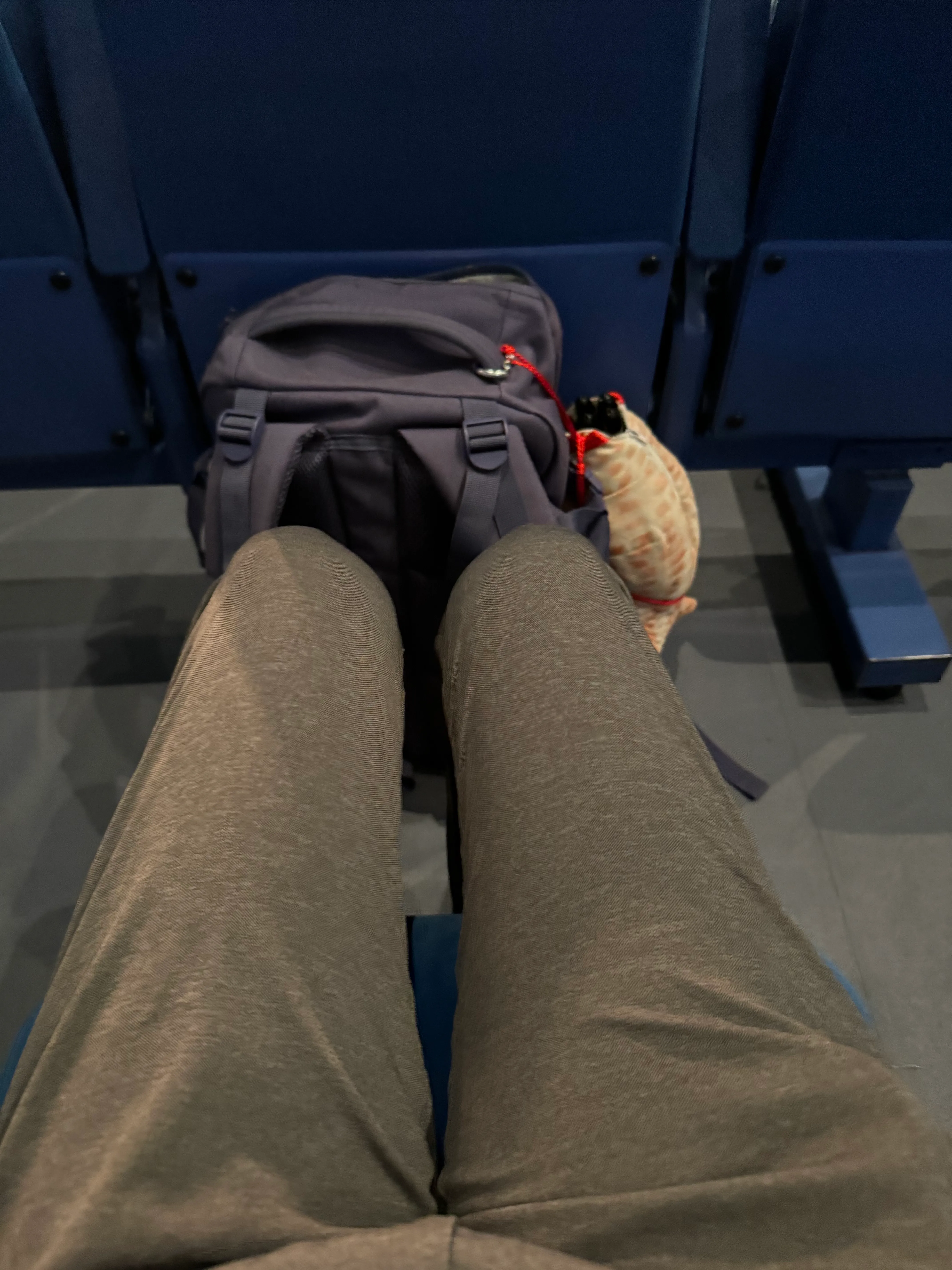 Yokohama Arena Center Seat. Class leading legroom and footwell space.
To start off, here is my legroom evaluation using my standardized legroom test method with a large bag as a spacer. I recommend reading the methodology post to find out what the ratings mean and how the test is done.
| Location | Rating | Remarks |
|---|---|---|
| Level 1 Center | Excellent (Large Gap) | Seats fold |
| Level 1 Arena | Average (No Contact) | Seats fold, footwell gap near mounting |
| Level 2 Stands | Did not test | Seats fold, Sloped under chair area |
| Level 2 Suite | Did not test | Seats fold |
| Level 2 Box | Did not test | Seats fold |
The seating in Yokohama Arena was renewed in 2016 by Kotobuki Seating ↗, but no details were provided in their official project portfolio page about the specific models of chairs used in the venue.
From what I can tell there are 4 different types of seats in the venue. Center and Arena seats, same product, different mounting. The stands seat (slightly different product), Suite seats and Box seats. The last two are more of a VIP product than a general visitor experience.
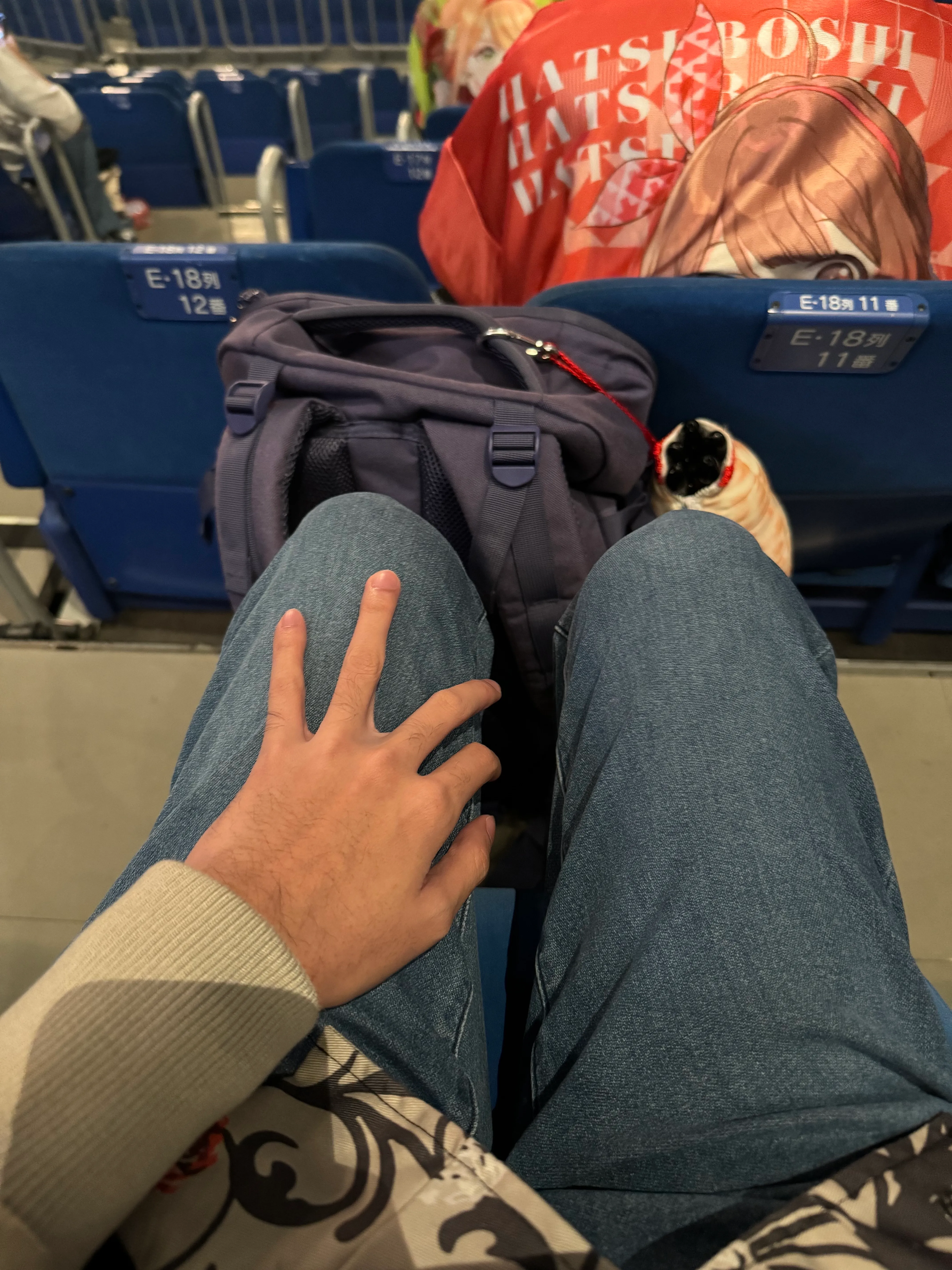 Yokohama Arena Arena Seat. More average on legroom, but still very good, this is because the chair in front leans back more into your foot space.
For my visit I got to review the Center and Arena seats. These are very compact folding seats with basic cloth upholstery that actually raise themselves upwards and reclines backwards when deployed. At the Center level where all seats are flat and level, this doesn’t bother you too much, but on the Arena, this means footwell space is reduced when the person in front is seated. In practice, this means that the Center legroom and footwell space is excellent, but the Arena legroom and footwell space is only average. Seat pitch also felt slightly shorter in the Arena.
Other nitpicks include the seat pan not being very deep, and the seats themselves rocking considerably when people move about. That being said, for Center, I would 100% be happier with these over the standard folding pipe chairs some other venues deploy in their arena.
 Seat mounting gap visible from the 360 panorama on the official website
For Arena specifically, I have a bone to pick with how the chairs are mounted. The design of the mounting mechanism leaves a “moat” around the chair where there is a sizeable gap. If you prefer to stand close to the chair instead of right up against the row in front of you, you’ll find yourself tripping backwards on this gap. The bigger risk being that the venue informs people via its announcement videos that items dropped into this hole can be lost permanently and are irretrievable, which is honestly absurd to me. Oh, and this does mean that if you drop something into the row in front of you it might roll into this gap.
Stands, suite and box seats are currently untested for me and would have to be checked at a later visit. There are 2 suite rooms and 8 box rooms, of which 4 are smaller. For the stands seats, they are permanently fixed in place so they won’t have the same issues as the Arena seats, and are much bulkier. My main concern from analyzing photos is that the space under the chair appears to be sloped rather than flat, so this will be annoying for people who like to store their bag under the chair.
Layout & Views#
There are a few possible concert layouts for Yokohama Arena, and the official website cites A and B layouts, including a center stage option. A has the stage run the width of the venue, while B has the stage opposite the Suite and Box seats, running the long side of the venue.
The official organizer plans page ↗ provides the capacity for each possible layout, which includes standing space that isn’t marked on the map. Interestingly this page does not cite numbers or advertise a center stage layout which was shown on the public information page ↗.
A layout capacity is 13,443 officially, broken down as follows
- 3,114 seats in Center (~23%)
- 5,498 seats in Arena (~40%)
- 3,271 seats in stands (~24%)
- 140 seats in suite and box (~1%)
- 1,420 standing (~10%)
B layout on the other hand, seats up to 12,477 which is broken down as
- 2,970 seats in Center (~23%)
- 4,933 seats in Arena (~39%)
- 3,086 seats in stands (~24%)
- 140 seats in suite and box (~1%)
- 1,348 standing (~10%)
This means that in practice, the actual seated capacity for Yokohama Arena, excluding standing seats, can be 35% less than its quoted 17,000 maximum capacity.
One very crucial thing to note is how Yokohama Arena names their sections. 2F Arena is not “right in front of the stage in the flat area” like in most venues. Instead, that flat area is called Center in Yokohama Arena. This is important to note as people may see Arena and think they won some seat in the middle pit only to not be able to find their seat. Personally I would prefer to call that 2F block “stands” instead. In Yokohama Arena, “stands” would refer to the 3F seats only.
What about views? The official website provides a 360 panorama ↗ where you can click and pan around fixed spots in the venue to check it out. The seats also accurately reflect the seats you’ll see in the venue. I’ve currently only experienced 2F Arena blocked view (extreme stage side) and 1F Center.
Center is your classic arena experience which is flat and there is reliance on height to get a good view. For the show I went to, there were 12 center blocks, 3 per row with the last row having a raised platform. Ironically, that meant that if you were shorter, the back of arena is not nearly as bad as the middle.
2F Arena on the other hand means that unless you’re on a specific section, you’re likely looking at the show from a sideways angle. This can be fine and I found the angling good enough that you weren’t going to be struggling to see over people.
3F stands seem significantly more distant from the stage. This might be the point that some people consider binoculars especially if you’re right at the other end facing the stage.
Venue Acoustics#
Venue acoustics appear to be affected by where you are seated. For the show I attended in A layout, the difference between Arena stage side and Center was tangible. Notable differences include stage side being quieter and being able to hear echo during quiet parts of the show, something that usually is more apparent in larger venues than ones of this size. Another one is having much more bass and floor rumble when in the Center compared to stage side.
Specific to the show I went for, the mics felt like they were coming in way too hot, with the vocal range covering most of the high end detail of any backing track, as well as some mild distortion that sounds like somewhere in the chain was barely clipping. I’m sure this is more of an audio engineering problem that is fixable than a venue specific downside though.
Facilities#
Convenience Stores#
I’m going to add this observation here, because this venue having a convenience store right at its doorstep means that it might as well be considered a facility many people will use.
The Lawson in front of the venue is decently large, and I found it to be surprisingly well stocked. Every day I visited, I made sure to go down 1-2 hours before doors open to check the stock and queue situation. While you will expect to wait, I can say with confidence that the store was absolutely decked out with water and other drinks despite the constant influx of people heading in to grab something. Since this is cheaper than buying from vending machines, I would gladly recommend people use the convenience store here.
Actually the FamilyMart two junctions away (新横浜三丁目店) is also really well stocked. Between those choices you really don’t have much to worry about. As a side note, whoever runs this one is really into some of the anime culture stuff because the store is known for blasting music relevant to the show that day, some might even consider it a must-visit destination.
Coin Lockers#
There are 592 coin lockers in Yokohama Arena, broken down into approximately 248 on 1F and 344 on 2F. The price ranges between 300 Yen for small and 600 Yen for large.
For the specific show I attended, they meticulously fenced off and draped black cloth over every single coin locker in the venue. That means that even if the venue did have nearly 600 coin lockers, it didn’t matter because none of them could be used.
The alternative would be to use the 33 lockers right outside the venue at Studio Mugic Yokohama. Otherwise, I’m sure you could hunt down a coin locker at Shin-Yokohama which is a major train station.
Given the operational risk of not being able to use coin lockers, I would advise against bringing items to the venue that you would need to stash away before the show.
Toilets#
In this venue, male and female toilets appear to be equal sized and also have the same count, so when we say 1 toilet in this section, we mean one toilet for each gender with multiple stalls inside.
There is one public toilet outside the venue, it’s not very large and tends to develop a long line close to show time. I didn’t use this toilet, because for the specific show I went to, the upper floor 2F toilet in the venue was usable by attendees before the show due to it being an entrance for an exhibition area.
Unfortunately with only one toilet I would probably prefer to enter the venue then use the toilets inside. Yokohama Arena has put out official notices to not use toilets in the surrounding public facilities. While I won’t get into the SNS fallout over these statements ↗, I will say that it is best to settle any toilet related affairs before coming to the venue. After the show I attended, they did say they would relax some policies about using the venue toilets after the show ends ↗, though the jury is still out on how they implement it.
Inside the Venue
Based on the map given by the venue there are a few toilets in the venue:
- 2 toilets on 1F, to the left and the right of the entrance.
- 4 toilets on 2F, one in each of the 4 corners of the building
- 4 toilets on 3F, one in each of the 4 corners of the building
The main downside of toilets inside the venue is that for the male toilets, the number of urinals is exactly 4 for each toilet. There are at least 10 stalls in the toilets, and the venue leaves a sign telling people to use the stalls instead of waiting around for a vacant urinal. This is a tangible downside as it is harder to check the status of all stalls for a vacant one than it is to quickly check for an empty urinal.
For the females, there shouldn’t be anything to worry about, as the layout suggests that given equal space, the female stall count should be very good. I can’t legally confirm this for you though…
Food & Drink#
 In-venue food and prices for Yokohama Arena
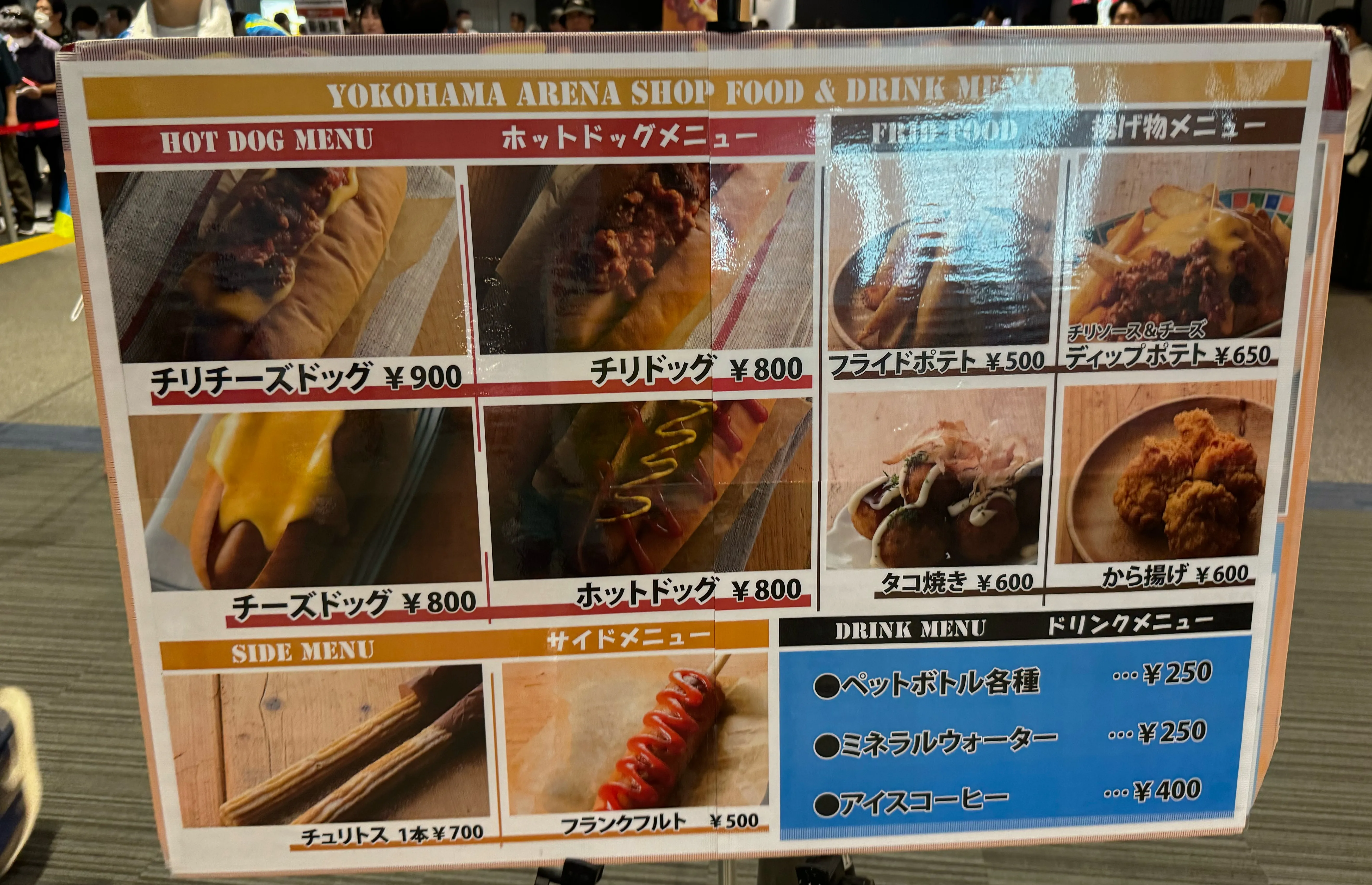
Yokohama Arena sells food in the venue. The menu covers stuff like hot dogs with various toppings starting at 800 yen and fried finger food starting from 500 yen. Bottled drinks including water is sold at 250 yen each and iced coffee is 400 yen.
While not the most absurd price for in-venue food, it still represents a decent markup over what you can get outside. There is one stall at level 1 and one at level 2 at minimum (the others weren’t open during my visit) so you shouldn’t have to fight for food if you really wanted something.
You don’t really need me to spell it out, but this isn’t great value. It’s par for the course for venue food, and the drinks might even be slightly more affordable than the usual 300-500 yen ballpark for a cup I see in other places.
Where to Eat Before the Show#
Shin-Yokohama may not be Yokohama station but there is no shortage of food options nearby. McDonalds gets crowded around lunch hour but that’s far from the only food in the area. You should be able to find some restaurants around the area near the venue and the train station itself. For anything else, there’s the trains to bring you elsewhere. This really isn’t a venue where you’re going to go hungry at.
Exiting & Crowd Control#
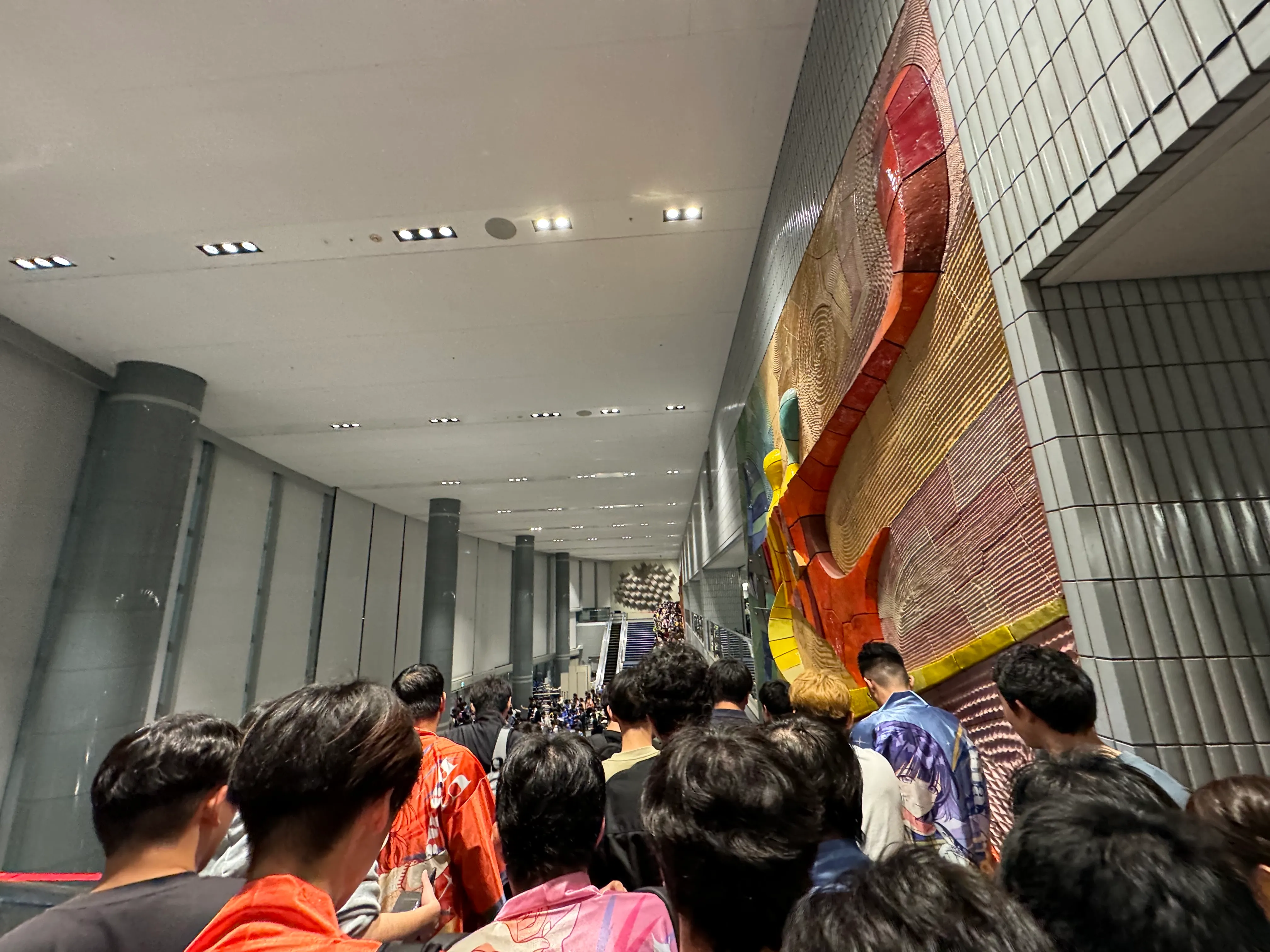 Dismissal at Yokohama Arena. Note the opposite side of the hallway where you can see that half the staircase is blocked off, making an already tight choke even tighter.
At least for when I was there, there’s no exit procedure or gradual staged dismissal of individual sections. The end result is 14,000 people rushing towards one single entrance, with the upper level people funneling down two flights of stairs. To make matters worse, they decided to block half of the staircase for some reason. The end result is that if you’re not sprinting towards the exit, you’re going to be stuck behind a very slow moving choke. This issue could have been resolved if they opened up other exits on the upper level as well, but for the show I’ve attended that was not the case.
From the exit you’re likely to be guided onto the overpass to return to Shin-Yokohama station because this requires less manpower to block off street roads for safety. The return route is very straightforward compared to most venues.
It comes off to me that instead of doing a proper ordered dismissal procedure, they just decided to turn the venue into a huge choke point and use that instead to regulate the crowd density heading towards the train stations. It’s a bit like burning down a building to clear a rat infestation — the objective was technically achieved, but the methodology seems questionable.
Where to Eat After the Show#
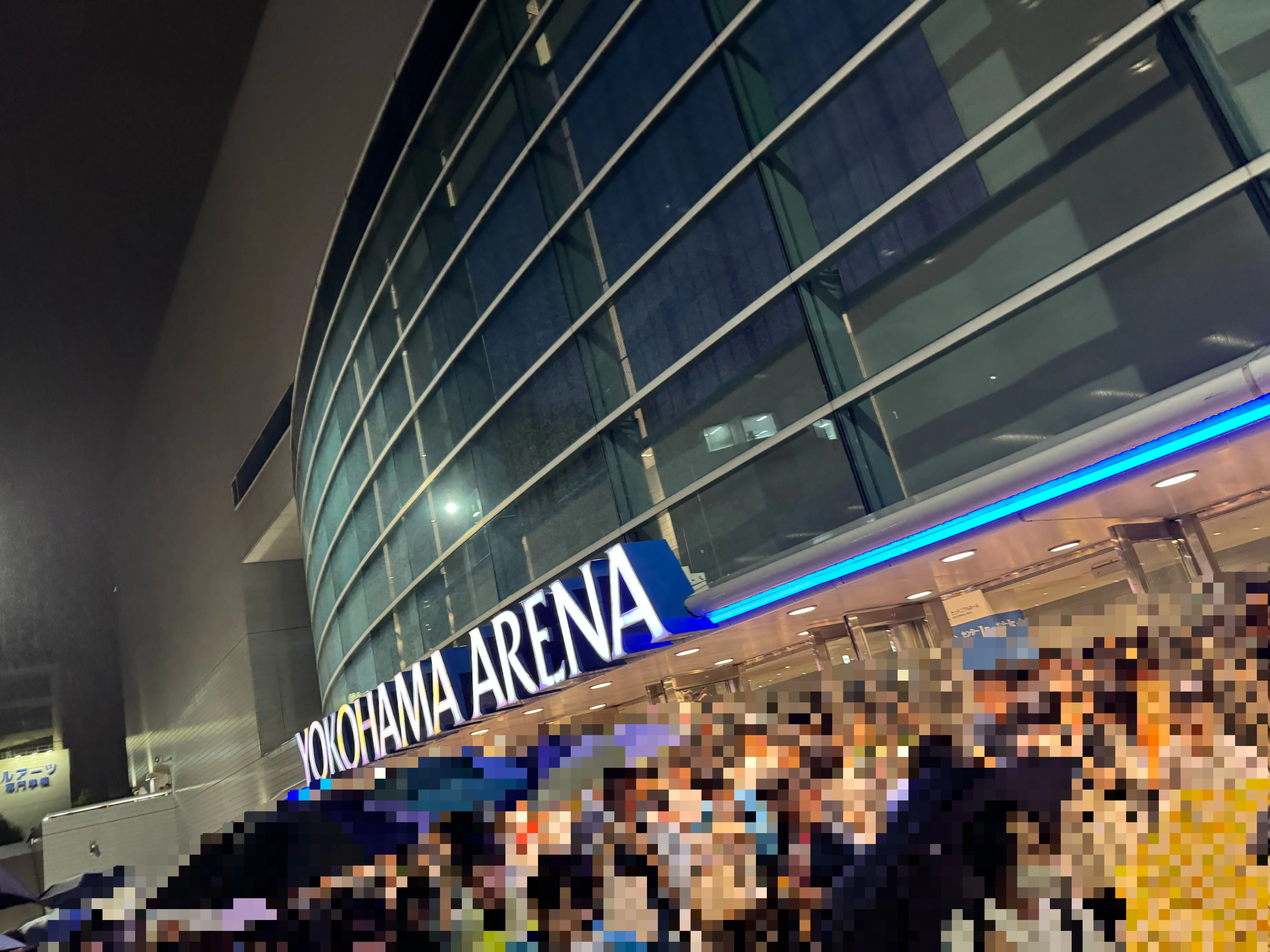
Picking somewhere to eat after the venue is not very difficult. There are a number of shops at Shin-Yokohama station that close at 23:00 which is plenty late enough. Some shops like the McDonald’s at the station open up to 24:00.
If you head to Yokohama station via train, that gives you even more options. Realistically you should not run into issues finding food after a late show here at this venue.
Where to Stay#
Even though Yokohama Arena is not at Yokohama station, the level of connectivity means everywhere in Yokohama is quite viable, including Yokohama station itself, which connects via the Blue Line.
For well connected venues like this, one of the viable strategies is to find hotels based on price, then check travel time from the hotel to the venue.
Otherwise if you absolutely insist, you can stay close to the venue. Shin-Yokohama does have hotel options and that means that you won’t have to fight the train crowd to leave the area.
Daiwa Roynet Hotel Shin-Yokohama is probably the closest hotel to the venue in the absolute distance sense, map measuring tools put it at under 200m walk to the venue, making it closer to the venue than the walk to the platform of Shin-Yokohama. However, with the venue being so close to the station anyway, I would not restrict myself to just one hotel choice.
Conclusion#
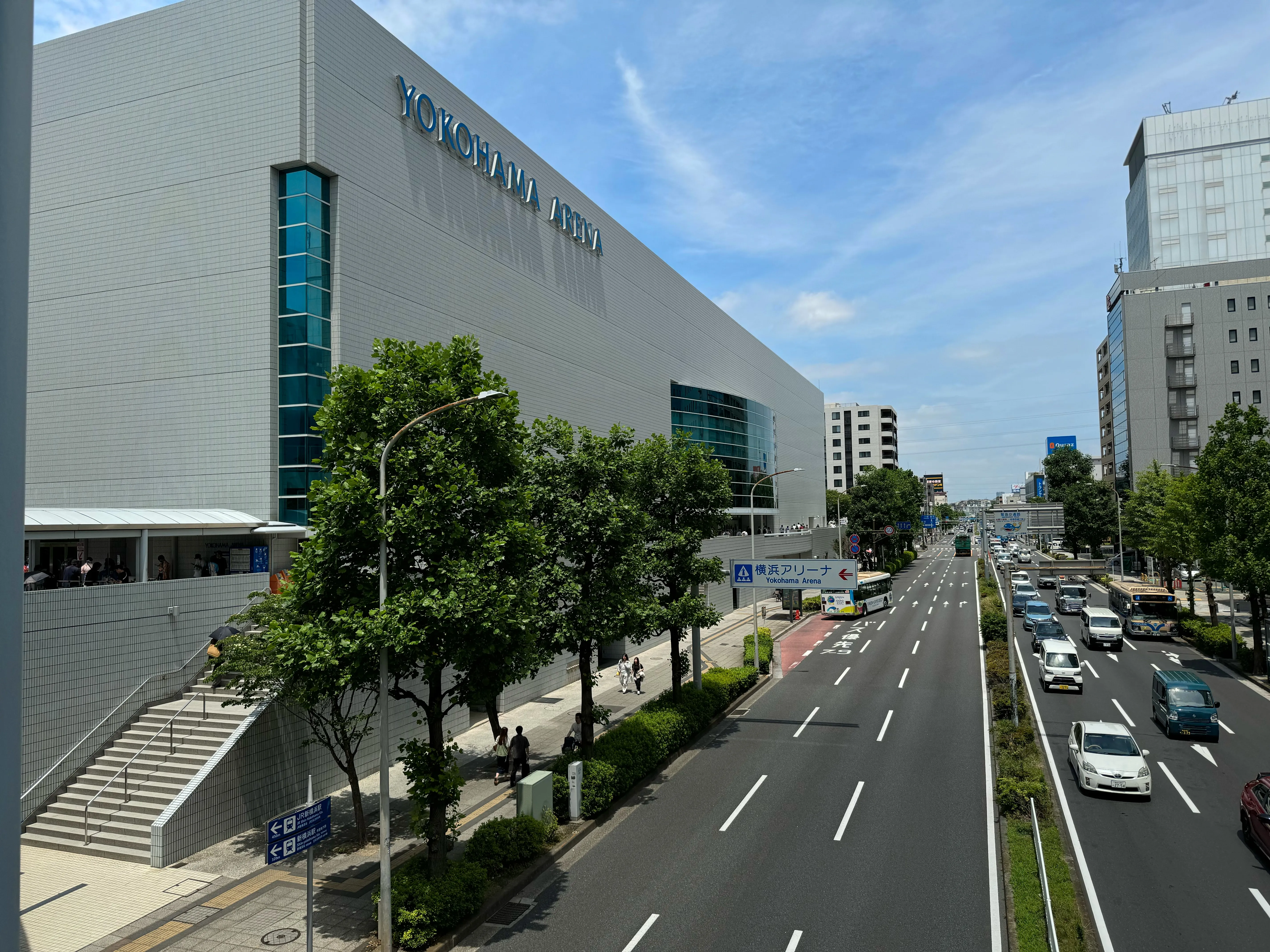
Yokohama Arena brings an interesting combination of being both highly connected and also close to the station, something that is not very common in the venue space where you usually get one or the other but not both. I’ve highlighted a bunch of annoyances in this guide but none of them are complete dealbreakers. I definitely do wish exit control was less poorly managed and the seat mounting gap on 2F arena was patched up though. Just remember, don’t go to K-arena or Yokohama station, unless you want to farm social media engagement for going to the wrong venue.
If this guide was useful, the newsletter is worth a look. It covers updates and revisions to guides like this one whenever venues change or a new visit warrants it, so the information you’re relying on stays current. Occasionally it features other pieces that don’t fit the guide format but are worth your time if you’re navigating live events in Japan.
Subscribe Here